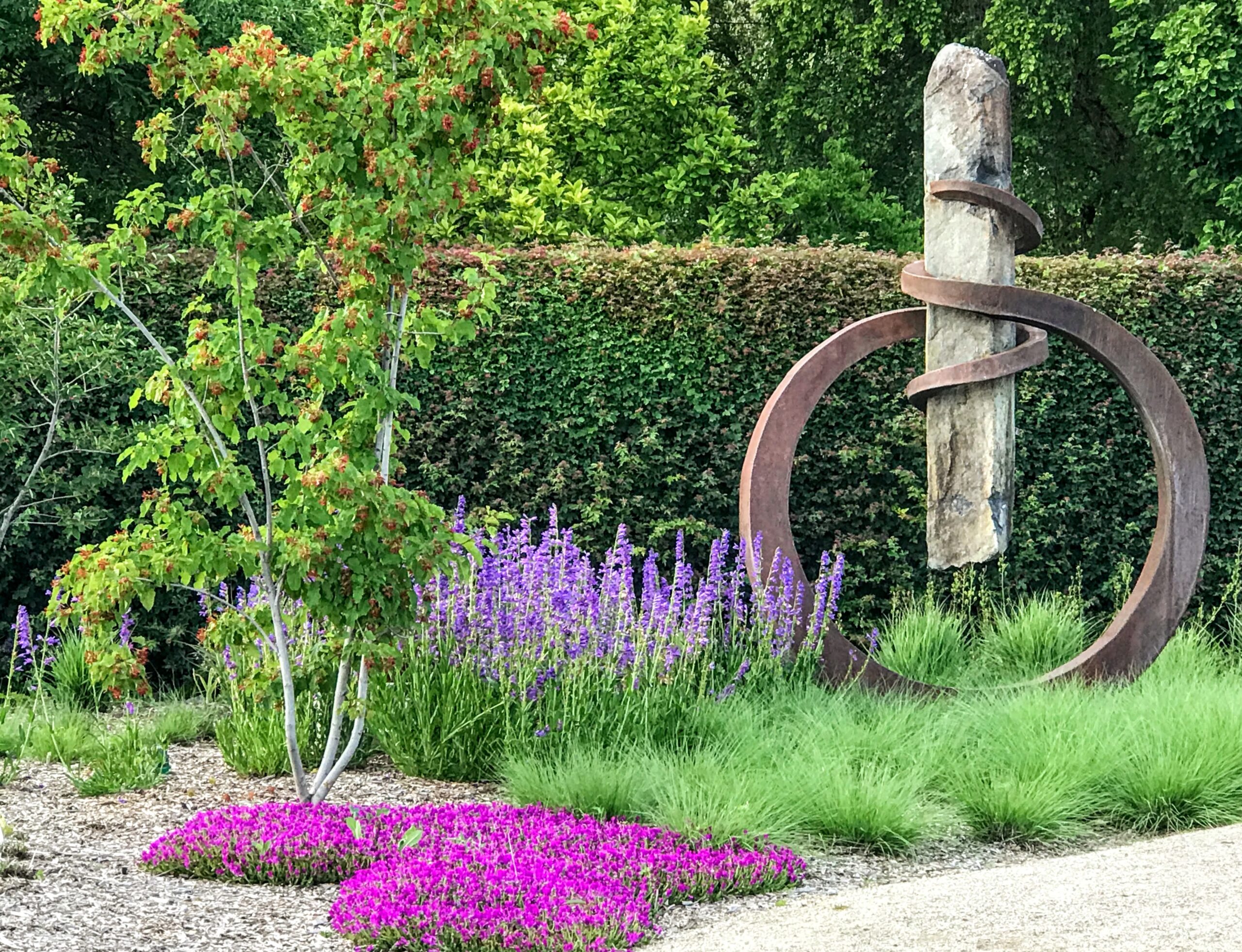
Gardens of the Wild Wild West

Gardening is civil and social, but it wants the vigor and freedom of the forest and the outlaw. ~H.D. Thoreau

Announcenment from Idaho’s Bounty

February28

Greenhouse Workshop & Tour
presented by the Banbury Institute and Idaho’s Bounty

EcologyPears

Saturday March 6th & Sunday March 7th

With Dale Bates of Living Architecture
& James Reed of Onsen Farm: Winter Gardens

Workshop: Saturday March 6th – 9:30am to 5:00pm
Dale and James will facilitate this two day Greenhouse Workshop and Tour. Bring your projects or ideas and share them with others in the group. You will be exploring a variety of greenhouse concepts, along with looking at several existing working greenhouses in the area.
The workshop will be located at Steve and Kathleen Wilson’s home in Bellevue Farms (South of Bellevue) at 122 Quarter Horse Dr.

Tour: Sunday March 7th – 12:30pm to 4:00 pm
We will meet at Arden Schmit’s farm in Gooding at 12:30 to explore his greenhouse, then we will drive to Onsen Farm: Winter Gardens, from where we will start a walking greenhouse tour.

Cost:
$35 for the whole weekend or $25 for Saturday’s workshop only, payable to James Reed. Please call James to register at 208.543.9987 or 208.720.0673 or email jamescreed@mindspring.com

$10 for Sunday’s tour only, payable to Idaho’s Bounty Co-op.
Please call Julia Augustus to register at 208.721.1412 or email jaugustus@idahosbounty.org

Carpooling to the tour will take place from the Wood River Valley and Treasure Valley. Please bring water, a sack lunch or snacks if needed, and wear appropriate outdoor clothing.

EcologyPears

Please contact me with any questions or comments.

Sincerely,

Julia Augustus
Idaho’s Bounty
208.721.1412
jaugustus@idahosbounty.org

Gardening 365 – Day 58

February28

Last night, Gardens of the Wild Wild West’s Undergardener, Flyboy, had an epiphany. It is so remarkable I am sharing it with you whilst he runs out to file a trademark and copyright on it. Here it is:

I need to give you what you ask for – not what I want to give you.

This, my gentle readers, comes to him after being married to yours truly for almost 28 years. No, really.

Gardening 365 – Days 55, 56, and 57

February27

I could have fudged and set those posts to fire off every day, but no. I knew you’d be on to me. So trust me when I tell you I’ve had something to do with serious gardening/ecology/natural systems and water resources for the last several days. Up at 6, in my seat at 8, brilliant, visionary speakers all day ever day to the point my head is spinning. I shall do my very best to bring some of what I learned to you over the next few days. The big take home: there is so very much I don’t know, never will, not enough time to learn it all.

Let me say tho, Joel Salatin is a vibrant, gifted and entertaining speaker. And he is not a pigot. And no, I don’t know if he has a farmer’s tan. He was wearing a sport coat. Sheeeeesh.

Gardening 365 – Day 54

February24

Making my way to Albuequerque for the Xeriscape conference. Will catch up w/some of my Garden Writer colleagues in crime: Scott Calhoun of Zona Gardens/Tuscon, girlfriend Nan Sterman from Encinitas, CA, and Saxon Holt, our photographer bud of Novato, CA.

We’ll be here if you need us:

Gardening 365 – Day 53

February23

What did I do today that had to do w/gardening? Ohhhhhhh, let me count the ways.

Preparing some p/r stuff for a client’s new website.
Stomped through the mud, slid through the mud, to measure and lay out a client’s new vegetable garden of raised beds.
Worked on some time lines for the Annual Garden Tour.
Packed for my trip to the Xeriscape Conference.
Went to a nursery and fondled the cane berries, and the asparagus crowns, and played in the hoop house w/pansies and primroses.
Read about gardening.
Admired my bashful hellebores as they slowly make their way forward into spring.
Chatted up the 300+ year old John Bartram, aka my pal Kirk Brown in PA.

Gardening 365 – Day 52

February22

I spent the better part of 2 hours hiking a horse pasture in downtown Boise, helping a friend determine the best place on the lot for a lovely new chicken house and run. Lots of arm waving and planning for the ponies and chickens and vegetable gardens. Big plans for long rows of razzles and blackberries. Yum. So much fun helping young family plan their new garden and play areas. Could have stood about 10 degrees warmer.

So, then home and a little fluffing with the goodies from the Saturday greenhouse adventure. Here ya go:

Gardening 365 – Day 51

February21

Had a note this morning from a Scott Varner of Xeriscape New Mexico He shared this brief article by Peter Gleick, one of our keynote speakers at this week’s Xeriscape Conference in New Mexico.

As someone once said, blogs are derivative. Occasionally that may be true, and this time I am happy to play along and share this with you:

Turf wars

I am participating this week in the 15th Annual Water Conservation and Xeriscape Conference and Expo, in Albuquerque, New Mexico, and I’ve been thinking about grass. Those of us who work on water issues in the western US and elsewhere know that a part of our water quantity and quality problems is the consequence of the vast amounts of water consumed by ornamental grass, or turf, or lawns. When early immigrants to this country came over from Europe, they brought with them their ideas of landscaping, mimicking the grand English gardens with sweeping expanses of green, manicured lawn. And when those early Americans moved west, that idea came with them again, into a climate that was completely unsuited for grass and a landscape that couldn’t afford the water.

Water Number: 3 to 5 acre-feet per acre. This is how much water, in hot, dry western climates, that turf grass can suck out of our rivers, streams, and groundwater aquifers to evaporate into the air. As Amy Vickers, a leading water conservation expert and anti-lawn crusader has put it, “America’s biggest drinking problem isn’t alcohol: It’s lawn watering.”

Today, more than half of all urban water use in most western states goes to landscaping, and most of that goes to trying to maintain green turf. In places like Las Vegas, as much as 70% of all residential water use goes to outdoor landscaping. Along with that water demand comes all sorts of other problems, including over-fertilization, excessive use of pesticides, air-quality contamination, and a heavy carbon footprint associated with the energy and pollution of lawn mowers.

Study after study shows that water savings from properly designed xeriscapes can be 30 to 70% or even more over badly managed turf lawns, while still producing beautiful gardens. A study by the Irvine Ranch Water District in Orange County, California found a savings of over 50% (1.4 acre-feet per acre) in homes landscaped with native plants rather than turfgrass. The Southern Nevada Water Authority concluded in a five-year study that converting turfgrass to water-efficient landscaping save 76% of the water. And an Arizona study concluded that while a 3,000 square-meter turfgrass lawn used 9,000 to 15,000 gallons of water per month, that same area covered with native plants, shrubs and trees used only 800 to 1,300 gallons per month.

My wife and I removed all the grass from our backyard, replaced it with beautiful plants, flowers, shrubs, and hardscape. We have plum, lemon, persimmon, and apple trees, and our total water use (indoor and outdoor) is under 50 gallons per person per day — far less than half what the average Californian uses. And believe me, I don’t miss mowing.
A lawn-free, low-water using garden.

More and more communities are exploring how to get away from the intensive water demands of turf. The East Bay Municipal Utility District’s WaterSmart program offers a rebate for removing lawn, as does the Southern Nevada Water Authority. Built Green in Colorado requires landscape design to follow xeriscaping principles. Sunset Magazine recently published an article entitled “Lose the Lawn” with 14 designs for water-efficient gardens. There are many other ideas and practices for limiting the area of turf, reducing the amount of water remaining turf consumes, and reducing the overall water implications of lawns in hot, dry climates. Google “xeriscape” or visit the resources of the Xeriscape Council of New Mexico, which is hosting this week’s conference and expo.

Maybe it’s time to put the residential turf lawn in the same category as smoking on a plane: socially irresponsible, undesirable, and ultimately, eliminated. There are beautiful alternatives available for our gardens.

Gardening 365- Day 50

February20

Yes, I made another foray to a greenhouse today. Expect more of this behavior. I was not alone. Many were prowling the aisles, fondling the greenery, noses in the tulips, grins on their faces.

Go ahead and make my teeth hurt with all that color.

Gardening 365 – Day 49

February19

It should come as no surprise I am now stalking all manner of spring blooms. Yesterday, you can see from my post I had to lay on the cold ground to admire and photograph the up and coming hellebores. Today, I went to see what was shakin’ at a nursery.

I give you the heralding Trumpets of Spring

Gardening 365-Day 48

February18

Still looking for something to share w/the Garden Blogger’s Bloom Day post. Ha, this is it. Half baked hellebores.

As my daddy used to say, “that’s all she wrote!”

« Older EntriesNewer Entries »

Bansai Posts

Garden bloggers meeting in Buffalo